
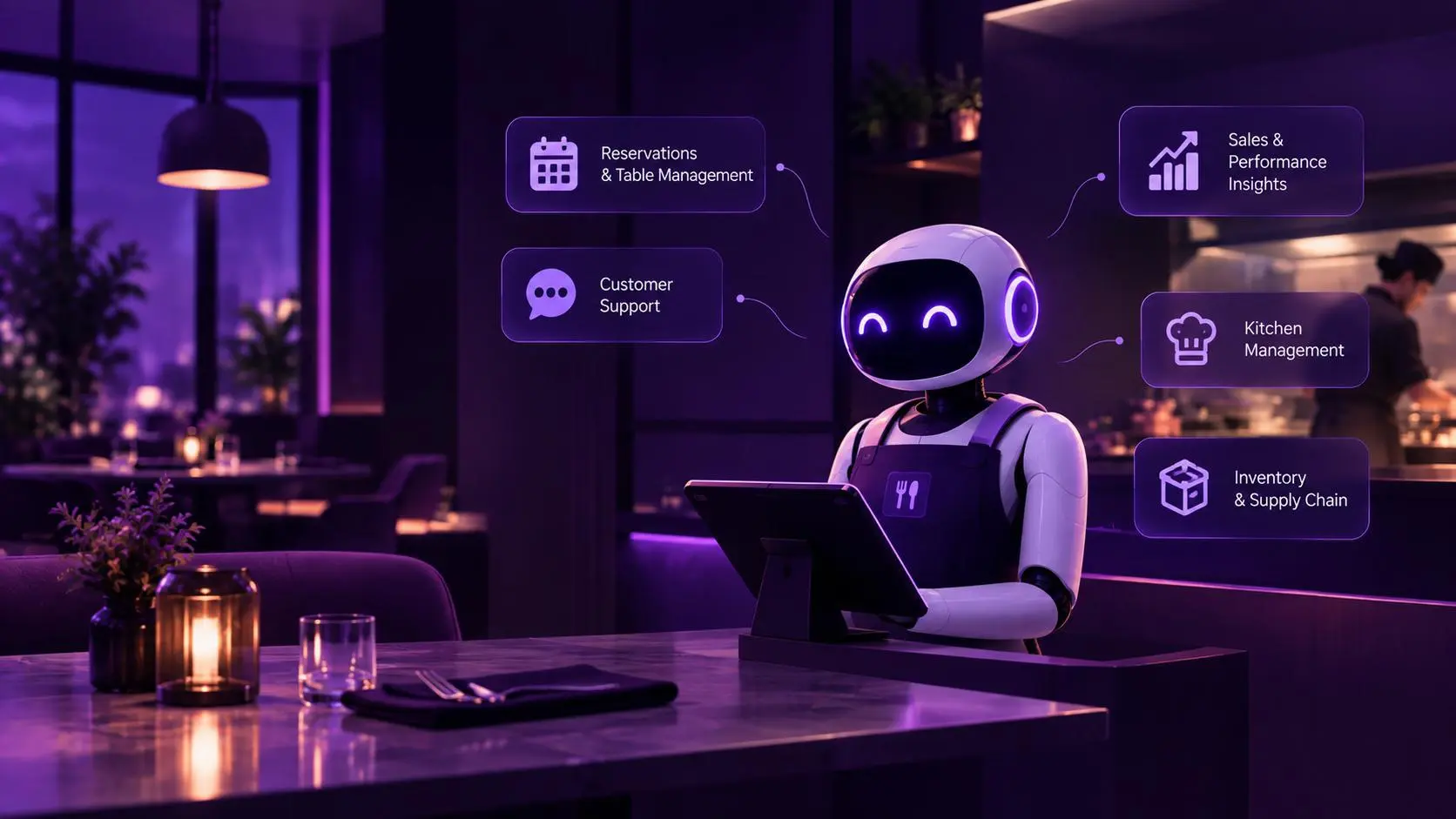
A restaurant phone that rings out during service tells the owner nothing, because the caller leaves no name, no number, and no booking. Chatley AI answers every call with a voice agent that works from the restaurant's own information, records the caller's request, completes supported workflows, and passes the conversation to staff when a person is needed. This post follows that one signal, the unanswered call, from the moment it happens to the outcomes it produces and the way a restaurant captures every lead that comes in.
What an unanswered call costs a restaurant
At 7 pm on a Friday, the host is seating a party of 4, the servers are carrying plates, and the phone rings out. A caller asking for a table for 6 on Saturday reaches voicemail and tries the next restaurant on the list. That caller was a booking at roughly $50 per head, so the restaurant lost about $300 without anyone knowing it happened.
The loss repeats during lunch rushes, weekend evenings, and the hours after closing. Each of those calls is a lead that the restaurant paid to attract through its Google listing, its website, or its reputation, and the phone is where many of those leads finally arrive.
How Chatley AI answers every call
Chatley AI places an AI agent on the restaurant's phone line. The agent picks up on the first ring and speaks with the caller in natural conversation. It draws on a restaurant-specific knowledge base that holds menus, allergen notes, opening hours, locations, parking details, and booking rules, so each answer matches what the restaurant actually offers.
The agent also understands what the caller wants to accomplish. A caller asking about gluten-free dishes hears the dishes on the current menu. A caller asking for a table for 6 is asked for the date, the time, and any special requests. The restaurant configures what each type of call should achieve, and the agent works toward that result on every call, including the 40 that arrive during the Friday dinner rush.
What happens during one call
Return to the party of 6 on Saturday. The agent greets the caller, confirms the date and party size, and checks the request against the restaurant's rules, such as a cap on large tables or a deposit for groups above 8. If the request fits the rules and the restaurant's scheduling tools are connected to Chatley AI, the agent completes the booking. If the request falls outside the rules, the agent records the details and routes the call to a manager. With all the context already in place.
The caller gets an answer in under a minute. The host never leaves the door. The restaurant ends the call with a recorded lead that includes the caller's name, number, date, party size, and requests, which is a complete record that a voicemail rarely provides. For restaurants handling high call volumes, AI IVR for incoming calls can route and handle common requests automatically while sending calls that need human attention to staff.
Outcomes a restaurant can expect
The numbers below use an example restaurant to show the arithmetic. They are assumptions, so replace them with your own call log.
Suppose the restaurant receives 200 calls a month and misses 30% of them, which is 60 calls. If 1 in 3 of those missed calls is a booking or event request, 20 leads disappear each month. At an average booking value of $140, that is $2,800 in revenue at stake. If the restaurant converts half of those leads once they are captured, it recovers $1,400 a month from one phone line. And the restaurant invested only $129 to recover this revenue.
Calls answered | 140 of 200 | 200 of 200 |
Booking and event leads recorded from missed calls | 0 of 20 | 20 of 20 |
Revenue recovered at 50% conversion | $0 | $1,400 |
Calls needing staff attention | All 200 | Only calls routed for handoff |
Results vary by restaurant, call volume, and booking value. But the key takeaway is how best you can improve your business with the least amount of investment.
How the restaurant captures every lead
Answering the call is the first step. Chatley AI then keeps each lead moving until it becomes a guest at a table.
Booking requests go into the restaurant's scheduling workflow, so staff see them where they already work. After-hours calls are answered and logged, so a private dinner enquiry for 20 that arrives at 9.40 pm waits as a written summary on the manager's screen the next morning, with the date, headcount, and budget attached. Follow-up messages confirm the booking, remind the guest the day before, ask how the meal went afterward, and ask for a review to keep your rating steady.
Adding a link to the restaurant's review page. Requests go only to guests who actually dined there, and each review reflects the guest's own experience. Google's policies and the US FTC rule on fake reviews, finalized in 2024, both prohibit fabricated reviews.
What the call records show the restaurant
Every call leaves a transcript and a record. A manager can see which questions come up most, how many calls ended in a booking, and how many needed a person. If 30 calls in a month ask about parking, the restaurant adds parking directions to its website and its knowledge base. If feedback replies mention slow service on Friday evenings, the manager can focus on that shift.
This turns the phone line from a source of interruptions into a record of what guests want, which is documented and helps the restaurant see demand it could not see before, including the calls it used to miss.
Where staff step in
Chatley AI handles routine calls and hands off the rest. The restaurant sets the escalation rules, and the usual list covers complaints, refunds, serious allergy questions, large events, and decisions that belong to a manager. The agent routes those calls to a team member with the details already captured, so the guest does not repeat themselves.
Staff keep the work that needs judgment and presence. The agent takes the repetitive calls, leaving hosts and managers free to serve guests in the room and reply quickly to the leads that matter most.
How to start
A restaurant can begin with this one workflow and measure it within a month.
Count the missed calls. Have the host team log every call that rings out for 1 week.
Fill the knowledge base. Add menus, allergen notes, hours, locations, booking rules, and policies.
Set the handoff rules. Decide which calls go straight to a person.
Go live on the main phone line. Start with service hours, then extend to after-hours.
Review results weekly. Track calls answered, leads recorded, bookings completed, and handoffs, and compare them with the week before launch.
And if all this still sounds confusing, Chatley has an in-built AI agent Arc to take you every step of the way in getting set up.
Conclusion
An unanswered call is a lead the restaurant already earned and then lost. Chatley AI answers each call from the restaurant's own information, records the request, completes supported bookings, follows up with the guest, and hands off to staff when a person is needed. Start with call answering, log the results for 1 month, and compare leads recorded against the 60 calls in the example above.